


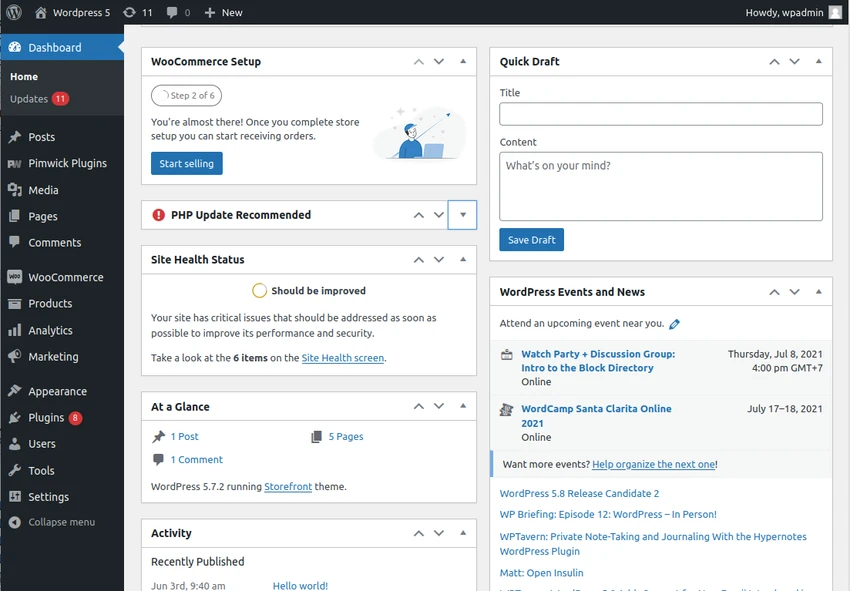

WordPress is a free web publishing platform that allows users to create websites, blogs, and online applications. Originally developed as a blogging platform, it has grown into a flexible content management system used for many different types of websites, including personal blogs, business websites, portfolios, news sites, online communities, and custom web projects.
The software is built with simplicity and flexibility in mind, allowing users to publish content quickly without requiring advanced technical knowledge. At the same time, WordPress can be expanded through thousands of available themes and plugins, giving users the ability to customize the appearance and functionality of their websites.
Creating content with WordPress is designed to be straightforward. Users can write posts and pages, format text, add images and other media, and publish content online with minimal effort. The platform also includes publishing controls such as drafts, scheduled posts, revisions, private content, and password-protected pages.
WordPress provides tools for managing multiple users with different roles, making it suitable for websites with several contributors. Administrators can control website settings, while editors, authors, contributors, and subscribers can have different levels of access.
With built-in media management, theme customization, and standards-compliant code, WordPress provides a reliable foundation for creating and maintaining websites. Whether used for a simple blog or a larger online project, WordPress offers a scalable platform that can grow alongside the needs of its users.
Features of WordPress
- Create websites, blogs, and web applications
- Simple publishing tools for creating and managing content
- Support for posts, pages, drafts, revisions, and scheduled publishing
- Flexible website customization with themes and plugins
- User management with multiple access roles
- Media uploader for images and other content
- Support for image captions, titles, alt text, and galleries
- Ability to create private and password-protected content
- Thousands of available themes for website customization
- Plugin support for extending website functionality
- Standards-compliant generated code
Interface and Usability
WordPress provides a user-friendly publishing experience designed for both beginners and experienced website creators. The content creation process is similar to working with common document editors, making it easy to create posts and pages, format text, and add media.
Managing content is also straightforward, with tools for saving drafts, scheduling posts, and reviewing previous versions. The platform’s user management system allows website owners to assign different permissions, which is useful for sites with multiple contributors.
Customization is one of WordPress’s strongest usability features. Users can change their website appearance through themes and expand functionality through plugins. The ability to upload themes and modify website designs provides flexibility for different types of projects.
Who Should Use WordPress?
- Bloggers who want an easy publishing platform
- Businesses creating professional websites
- Photographers and creators building portfolios
- Organizations managing online content
- Communities that need user management features
- Developers creating customized websites and applications
Conclusion
WordPress remains a versatile platform for creating and managing websites of many types. Its combination of simple publishing tools, customization options, and expandable features makes it suitable for beginners while still offering flexibility for more advanced users.
With support for themes, plugins, media management, and user roles, WordPress provides the tools needed to build everything from simple blogs to more complex online platforms. If you are looking for a flexible solution to create your own website, WordPress is a strong option to explore.


