


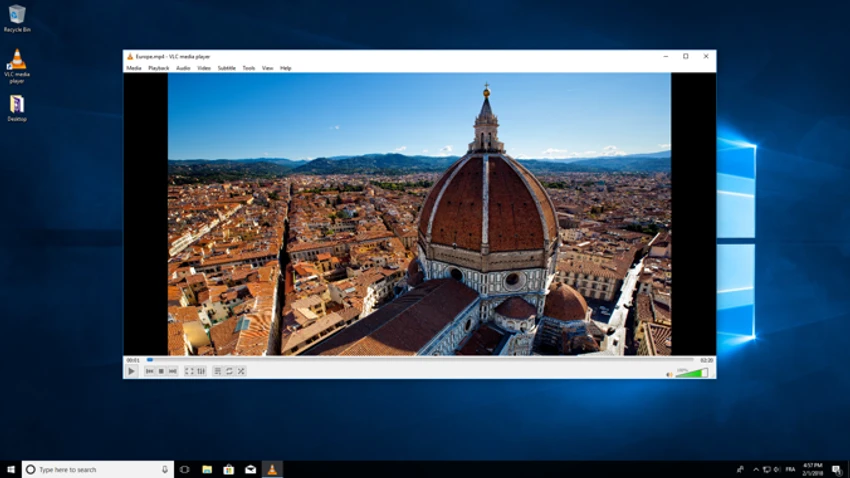

VLC Media Player is a free and open-source multimedia player developed by the VideoLAN project. It is designed to play a wide range of multimedia formats, including MPEG, MP4, AVI, DivX, DVDs, digital TV streams, and network-based video streams over IPv4 or IPv6.
One of its key strengths is that it does not rely on external codecs, allowing it to play most video and audio files immediately after installation. It supports streaming media, local file playback, and even live network broadcasts, making it a versatile tool for both casual users and advanced multimedia tasks.
VLC is available across multiple operating systems, including Windows, Linux, macOS, BSD, and others, ensuring a consistent experience regardless of platform. It is widely recognized for its stability, lightweight design, and broad format compatibility.
Features of VLC Media Player
- Plays nearly all video and audio formats without external codecs
- Supports DVDs, VCDs, and streaming protocols (RTSP, HTTP, RTP)
- Cross-platform compatibility (Windows, macOS, Linux, BSD, etc.)
- Live streaming and network playback support
- Frame-by-frame playback and precise speed control
- Video scaling and fullscreen customization
- Support for HD codecs including Blu-ray audio formats
- Playlist management and media library support
- Zipped file playback and advanced format handling
- Customizable interface and toolbars
Interface and Usability
VLC Media Player offers a simple and functional interface that prioritizes usability over visual complexity. The default layout is minimal, allowing users to quickly open files, adjust playback, and access advanced controls when needed.
Despite its simplicity, the player includes powerful advanced features such as frame-by-frame navigation, streaming configuration, and playback customization. The interface can also be customized with skins and toolbars, making it flexible for different user preferences.
Who Should Use VLC Media Player?
VLC Media Player is suitable for almost all users, from casual viewers to advanced users who need a reliable tool for playing different media formats. It is especially useful for users who frequently encounter unsupported video formats or require streaming capabilities.
Conclusion
VLC Media Player remains one of the most reliable and widely used media players available today. Its ability to handle nearly any media format without additional codecs, combined with cross-platform support and advanced playback features, makes it a strong default choice for video and audio playback.


