


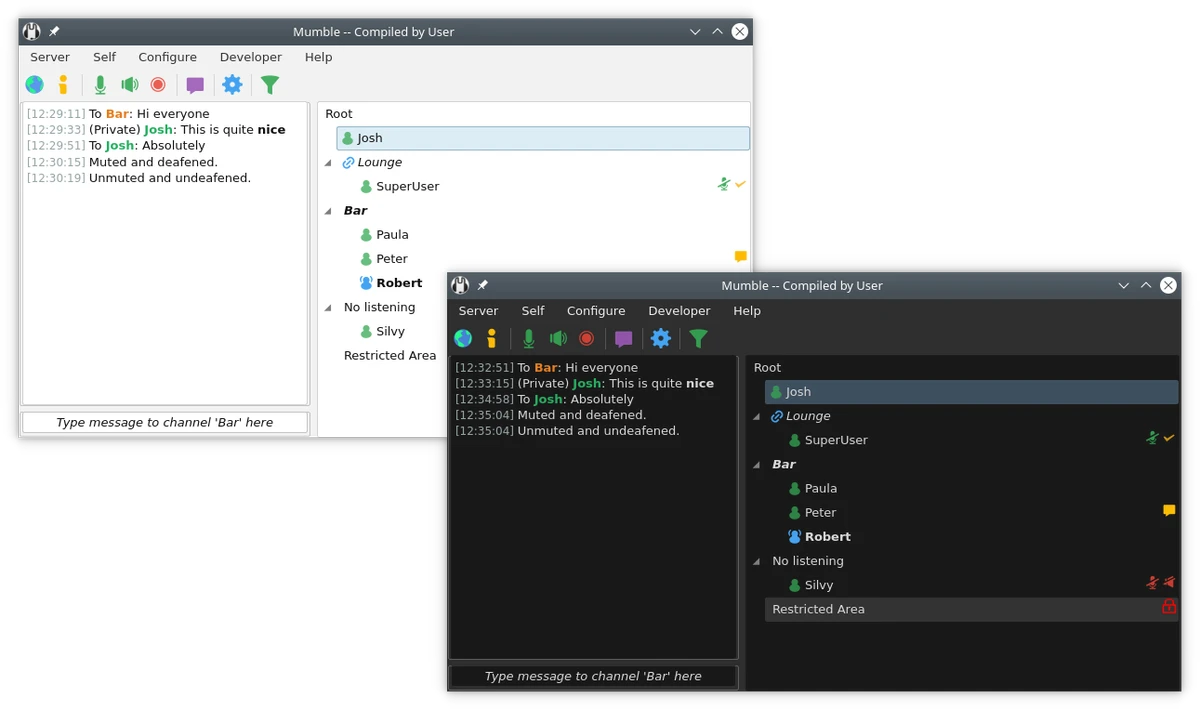

Mumble is an open-source voice communication application designed for users who need fast, reliable, and secure audio communication. Originally popular among gaming communities, Mumble focuses on low-latency voice chat, making it suitable for situations where quick communication is important. The application uses encryption for voice communication and provides features designed to improve audio clarity while reducing distractions.
One of Mumble’s standout features is positional audio support, which allows users in supported games to hear other players based on their in-game location. This creates a more immersive communication experience by making voices feel closer or farther away depending on player positions. The built-in overlay also allows users to access voice chat information while remaining inside supported games.
Mumble includes several audio enhancement tools to improve communication quality. Noise suppression helps reduce background distractions, while echo removal improves clarity during conversations. The application also automatically adjusts microphone levels to help maintain consistent volume between users, preventing situations where one person is too quiet or excessively loud.
Designed with efficiency in mind, Mumble uses low bandwidth and provides a portable version for users who prefer flexible installation options. With access control features, text-to-speech status updates, and strong encryption, Mumble remains a practical voice communication solution for gaming groups and communities that value performance and privacy.
Features of Mumble
- Low-latency voice communication
- Low bandwidth usage
- Always encrypted communication
- Open-source software
- High-quality voice processing
- Noise suppression for reducing background sounds
- Echo removal
- Automatic microphone volume adjustment
- Positional audio support in compatible games
- In-game overlay
- Access control lists (ACL) for user management
- Text-to-speech status updates
- Portable version available
Interface and Usability
Mumble provides a practical interface focused on communication rather than unnecessary visual elements. Users can connect to voice servers, manage participants, and adjust audio settings through a straightforward layout. For gamers, the in-game overlay adds convenience by allowing important voice chat information to remain accessible while playing. Audio features such as noise suppression, echo removal, and automatic microphone balancing reduce the need for constant manual adjustments, helping conversations stay clear during group sessions.
The application may require some initial configuration depending on the user's setup, especially when using advanced features such as positional audio or server permissions. Once configured, Mumble delivers a reliable voice communication experience with minimal delay.
Who Should Use Mumble?
- Gamers who need fast voice communication during gameplay
- Gaming communities managing private voice servers
- Users looking for encrypted voice chat software
- Groups that need low-bandwidth communication
- Users who prefer open-source alternatives to proprietary voice chat apps
Conclusion
Mumble remains a strong choice for users who need fast, secure, and efficient voice communication. Its low latency, encrypted connections, positional audio, and audio enhancement features make it especially appealing for gaming groups and communities that require reliable teamwork communication.


