


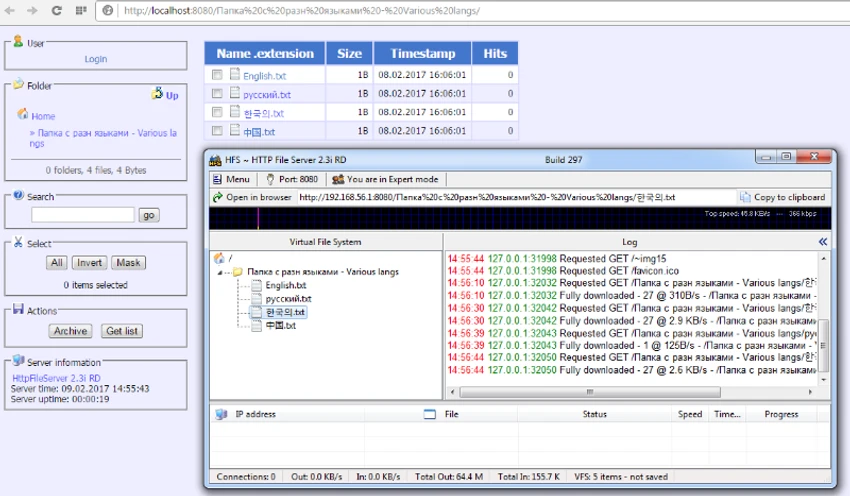

HFS (HTTP File Server) is a lightweight Windows application that makes sharing files over the internet quick and straightforward. Instead of relying on complex server software, it transforms your computer into an HTTP file server that users can access through a standard web browser. I found it especially useful for quickly sharing individual files or entire folders without requiring clients to install additional software. Despite its simple setup process, HFS offers an impressive range of advanced configuration options, allowing experienced users to customize permissions, bandwidth, user accounts, virtual folders, and many other aspects of file distribution.
Features of HFS
- HTTP-based file sharing through a web browser
- Fast file download and upload support
- Virtual file system management
- Drag-and-drop file sharing
- Share individual files or entire folders
- Highly customizable application settings
- Customizable HTML website template
- Bandwidth and download speed control
- Download limits for connected users
- Block download manager usage
- User accounts and folder permissions
- Kick or ban connected clients
- Pause active downloads
- Easy Mode and Expert Mode interfaces
- Server traffic graph and connection statistics
- Built-in logging
- Dynamic DNS updater
- Compatible with Windows 11, Windows 10, Windows 8, and Windows 7
Interface and Usability
One of the first things I noticed about HFS is how approachable it is for basic file sharing. Adding files is as simple as dragging them into the main window, while sharing entire folders only requires a right-click within the file panel. For beginners, the Easy Mode keeps the interface clean and focuses on essential functions. Users who need greater control can switch to Expert Mode, which provides detailed traffic graphs, upload and download statistics, and additional server management tools.
Although the application includes a large number of settings, they are logically organized. More advanced features such as virtual file systems, user permissions, bandwidth controls, and connection management may take some time to explore, but they offer considerable flexibility for users who need more than simple file sharing.
Who Should Use HFS?
- Individuals who need to share files quickly over the internet
- Small businesses requiring a lightweight file-sharing solution
- IT administrators managing temporary file distribution
- Developers and testers who need to host downloadable files
- Power users looking for detailed control over file access and bandwidth
HFS delivers an excellent balance between simplicity and advanced functionality. Its lightweight design, browser-based access, comprehensive connection management, and extensive customization make it one of the stronger Windows-based HTTP file-sharing solutions. While the abundance of configuration options introduces a learning curve, the software remains approachable for beginners thanks to its Easy Mode.
Conclusion
HFS is an excellent choice for anyone looking to share files over the internet without deploying a full-scale web server. Its drag-and-drop workflow makes basic sharing effortless, while advanced capabilities such as user accounts, virtual file systems, bandwidth management, and connection controls provide the flexibility needed for more demanding environments.


