


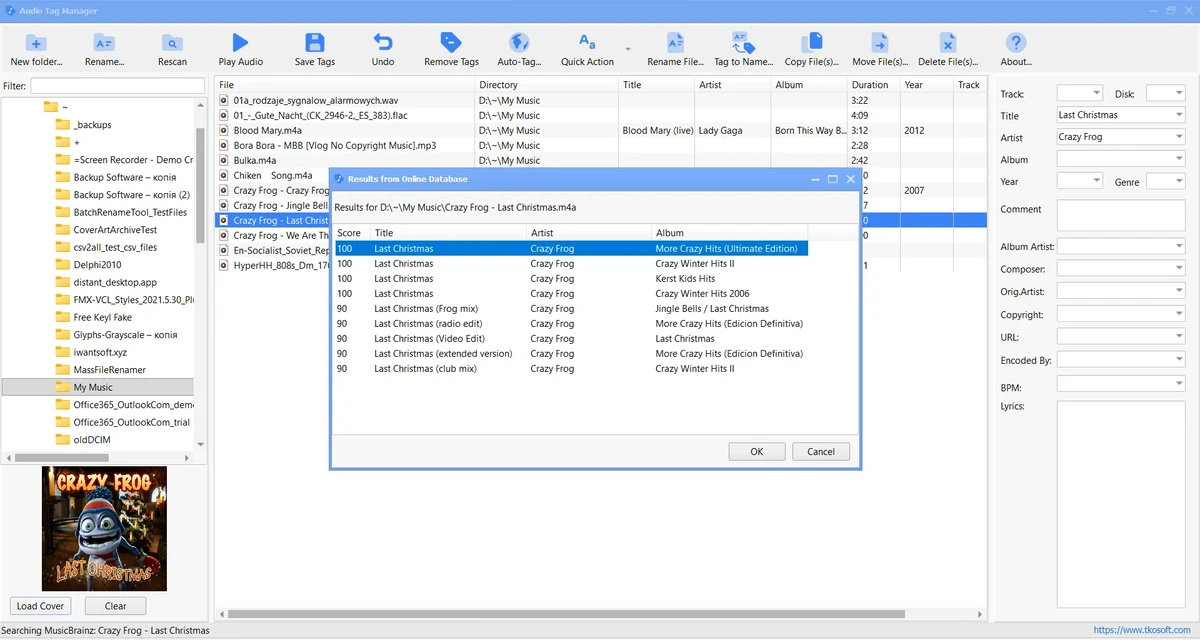

Audio Tag Manager is a free Windows application designed to help users edit, organize, and clean their digital music collections. The software focuses on managing audio metadata, allowing users to update song information, rename files, and maintain a more structured music library. During my experience with the application, I found it useful for handling collections where file names or metadata are inconsistent. It supports popular audio formats including MP3, FLAC, OGG, APE, M4A, WMA, and WAV, while providing tools for batch editing, automatic tagging through MusicBrainz, cover artwork management, and customizable cleaning presets. For users who want a simple way to improve the organization and accuracy of their music files, Audio Tag Manager offers a practical set of features without unnecessary complexity.
Features of Audio Tag Manager
- Free audio tag editor for Windows
- Supports MP3, FLAC, OGG, APE, M4A, WMA, and WAV
- Edit common tags: title, artist, album, year, track, genre, and comment
- Edit extended metadata: album artist, composer, BPM, URL, copyright, encoded by, and lyrics
- Batch edit tags for multiple audio files
- Rename files using metadata-based patterns
- Auto-Tag music files using MusicBrainz online metadata
- Manage album cover art — load, replace, or clear embedded cover images
- Built-in presets for common tag-cleaning actions
- Create custom presets for your own cleanup workflows
- Free for personal and commercial use
Interface and Usability
Audio Tag Manager is designed around practical music library management rather than complicated editing workflows. The interface provides direct access to common tasks such as changing metadata, renaming files, and applying cleanup operations.
The batch editing functionality is particularly useful when working with multiple albums or large collections. Instead of updating tracks individually, users can select multiple files and apply changes together. The preset system also helps speed up repetitive cleanup tasks, especially when fixing inconsistent naming or formatting. The MusicBrainz Auto-Tag feature adds convenience for files with missing or incomplete information. It can help identify tracks and fill in metadata, reducing the amount of manual entry required.
Who Should Use Audio Tag Manager?
- Music collectors organizing large audio libraries.
- Users who need to fix incorrect or missing metadata.
- People managing MP3, FLAC, or other digital music collections.
- Users who want to rename files based on song information.
- Anyone looking for a free Windows audio tag editor.
- Users who want simple MusicBrainz-based automatic tagging.
Conclusion
Audio Tag Manager provides a straightforward solution for users who want better control over their music collections. With support for multiple audio formats, batch tag editing, automatic MusicBrainz lookup, and flexible cleanup presets, it makes organizing large libraries much easier.


