


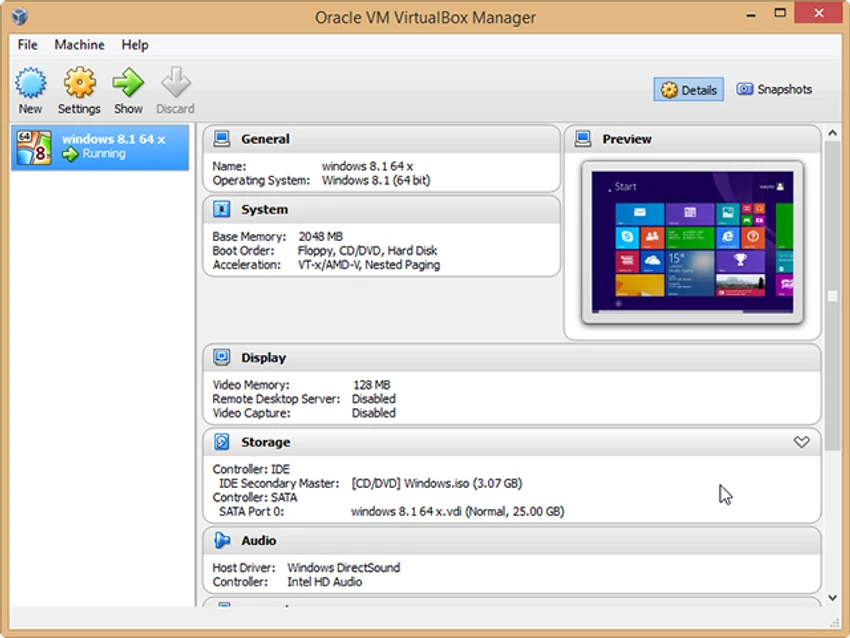

VirtualBox is a free, open-source virtualization platform that allows you to run multiple operating systems simultaneously on a single computer. Whether you're testing software, experimenting with a different operating system, or creating isolated development environments, VirtualBox provides a powerful yet accessible solution for creating and managing virtual machines (VMs).
Designed for desktop, server, and embedded use, VirtualBox supports a wide variety of guest operating systems while offering features commonly found in enterprise virtualization software. Its modular architecture, cross-platform compatibility, and extensive customization options make it a popular choice among developers, IT professionals, students, and technology enthusiasts.
The software also supports the VirtualBox Extension Pack, which adds additional functionality such as enhanced USB device support and other advanced capabilities.
Key Features of VirtualBox
- Free and open-source virtualization platform
- Run multiple operating systems simultaneously
- Cross-platform virtualization
- Modular architecture
- Client/server design
- Multiple management interfaces
- Command-line management
- Software Development Kit (SDK)
- Virtual machine configuration stored in XML
- Portable virtual machine definitions
- Guest Additions for Windows and Linux
- Improved guest performance
- Seamless mouse pointer integration
- Dynamic screen resolution support
- Shared folders between host and guest
- Virtual USB controllers
- USB device support for virtual machines
- Remote Desktop Protocol (RDP) support
- Virtual machines can function as RDP servers
- USB over RDP support
- Compatible with desktop, server, and embedded environments
- Extension Pack available for additional features
Interface and Usability
VirtualBox offers a clean management interface that makes creating and organizing virtual machines relatively straightforward. New virtual machines can be configured through step-by-step setup dialogs, while experienced users can fine-tune hardware allocation, storage, networking, and system settings in greater detail. Once Guest Additions are installed inside supported guest operating systems, the overall experience improves noticeably. Mouse integration becomes seamless, screen resolution adjusts dynamically, and shared folders simplify file transfers between the host and guest systems.
For advanced users, VirtualBox also supports command-line management and automation, making it suitable for development environments, testing workflows, and scripted deployments.
Performance
VirtualBox delivers solid virtualization performance for a wide range of workloads, particularly on systems equipped with modern multi-core processors and hardware virtualization support.
Guest operating systems generally run smoothly when allocated sufficient CPU cores and memory. Features such as Guest Additions help improve responsiveness, graphics integration, and usability inside virtual machines. As with any virtualization platform, overall performance depends on the host computer's hardware resources and the number of virtual machines running simultaneously.
Who Should Use VirtualBox?
- Software developers
- IT administrators
- System engineers
- Students learning operating systems
- Cybersecurity professionals
- QA and software testers
- Linux enthusiasts
- Users testing new operating systems
- Anyone needing isolated virtual environments
Conclusion
VirtualBox continues to be one of the most capable free virtualization solutions available today. It combines enterprise-grade functionality with an approachable interface, allowing users to create and manage virtual machines for development, testing, education, and everyday computing tasks. Features such as Guest Additions, shared folders, XML-based virtual machine configurations, USB virtualization, and Remote Desktop support make it suitable for both personal and professional use. The optional Extension Pack further expands its capabilities for users with more advanced requirements.


