


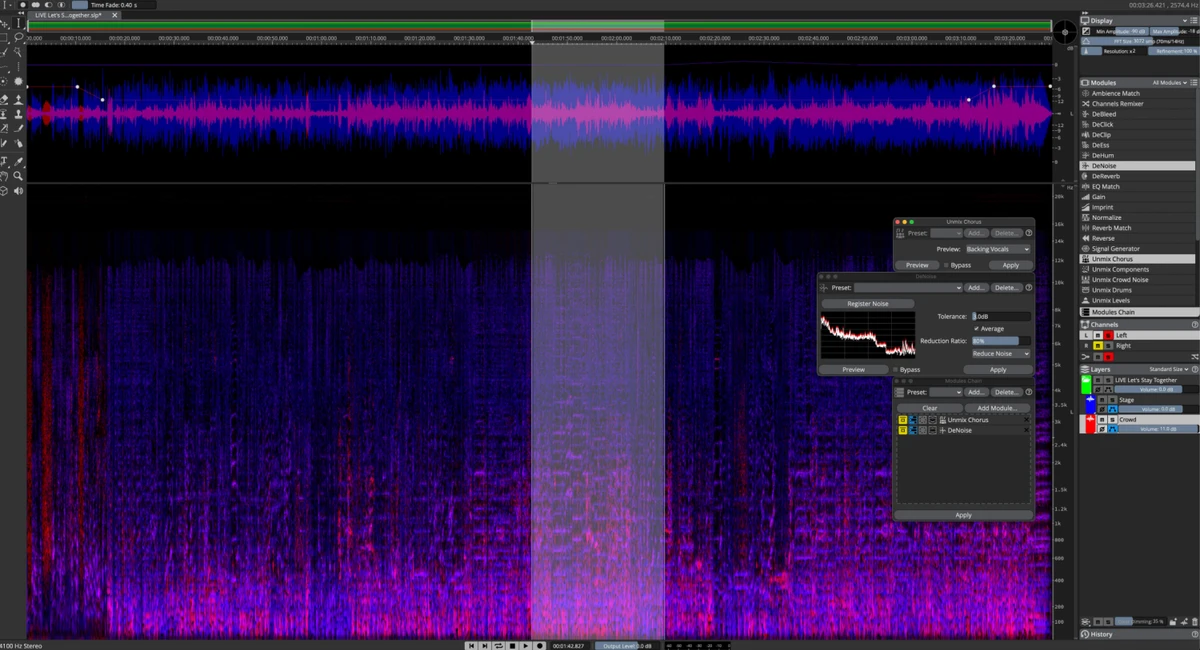

SpectraLayers is an advanced audio editing application that transforms sound into a visual spectrum, allowing users to directly interact with audio as if it were an image. This unique approach enables precise editing, restoration, and creative sound design by letting users select, isolate, and manipulate individual elements of audio data.
The software combines traditional spectral editing tools with modern AI-driven processing to automate complex tasks such as noise reduction, audio repair, and stem separation. It can be used both as a standalone application and as an integrated tool within digital audio workstations (DAWs) such as Cubase and Nuendo through ARA 2 support.
Designed for audio engineers, sound designers, and music producers, SpectraLayers bridges technical precision and creative flexibility, making it suitable for both restoration work and experimental sound manipulation.
Features of SpectraLayers
- Visual spectral audio editing with layer-based workflow.
- AI-assisted audio processing for improved speed and accuracy.
- Separate audio into layers for detailed editing and mixing.
- Stem extraction and audio unmixing capabilities.
- Isolate and manipulate:
- Tones
- Transients
- Noise components
- Advanced audio repair tools:
- Noise reduction
- Click removal
- Audio restoration
- Clip repair
- Manual and AI-assisted selection tools for precise editing.
- Freeform sound design and experimental audio manipulation.
- Seamless integration with DAWs via ARA 2 technology.
- Compatible with Cubase and Nuendo workflows.
- Non-destructive editing on DAW timelines.
- Export extracted audio layers for further processing.
- Available in different editions including Elements and Pro (feature depth varies).
Interface and Usability
SpectraLayers uses a visually driven interface where audio is represented as a spectral display rather than a traditional waveform. This allows users to “see” sound and interact with it directly, selecting specific frequencies or time segments for editing.
While the workflow is highly powerful, it is also more complex than standard audio editors. Users familiar with digital audio workstations will find the layer-based system intuitive over time, but beginners may need an adjustment period to understand spectral editing concepts. AI-assisted tools help reduce complexity by automating tasks like separation and noise removal, making advanced editing more accessible even for less experienced users.
Who Should Use SpectraLayers?
- Audio engineers working on restoration and cleanup.
- Music producers needing stem separation or remix preparation.
- Sound designers creating experimental or layered audio textures.
- Post-production professionals in film, TV, and media.
- Users working with Cubase or Nuendo DAWs.
- Anyone needing precise spectral-level audio editing.
Conclusion
SpectraLayers stands out as a highly specialized audio editing tool that combines visual spectral editing with advanced AI-powered processing. Its ability to isolate, repair, and reshape sound makes it a strong choice for professional audio restoration, music production, and experimental sound design.


