


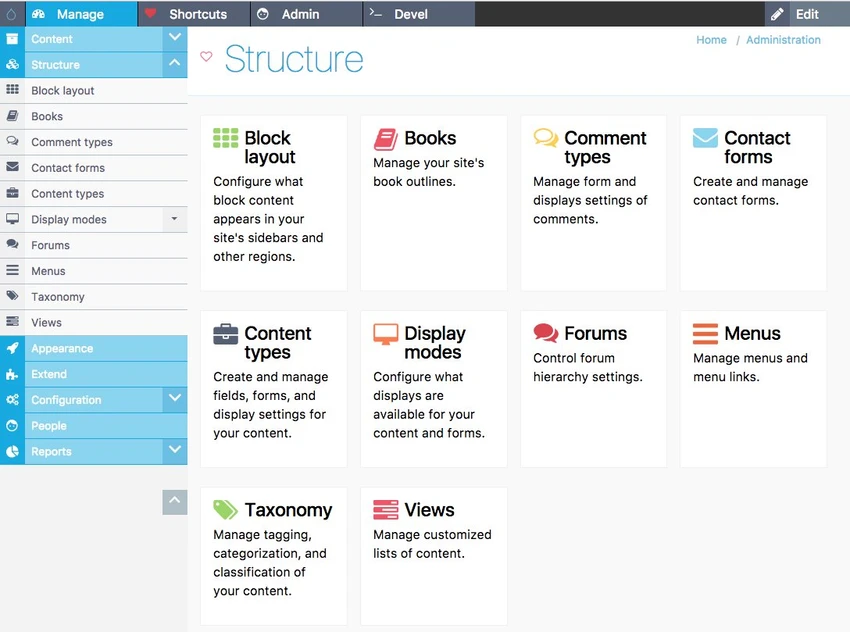

Drupal is a powerful open-source content management framework written in PHP and used by organizations worldwide to build websites, portals, digital experiences, and enterprise web applications. More than a traditional content management system (CMS), Drupal serves as a flexible development platform that combines content management capabilities with extensive customization options. From personal blogs to large-scale enterprise websites, Drupal provides the tools necessary to manage content, scale infrastructure, and integrate with modern digital ecosystems. Its flexibility, scalability, and security have made it a popular choice among businesses, government agencies, educational institutions, and media organizations.
Features of Drupal
- Open-source content management framework
- Built using PHP
- Highly scalable architecture
- Suitable for enterprise websites and web applications
- Extensive module and extension ecosystem
- Customizable content management workflows
- Responsive and mobile-first design support
- API-first architecture
- Integration with third-party applications and services
- Content publishing and management tools
- Flexible user roles and permissions
- Strong security practices and community-driven updates
- Support for large-scale, high-traffic websites
- Multi-device content delivery capabilities
User Experience
During my experience with Drupal, the platform demonstrated exceptional flexibility and scalability. Unlike simpler website builders, Drupal is designed for organizations that require complete control over content structures, workflows, permissions, and integrations. The platform's modular architecture allows developers to extend functionality through thousands of available modules, making it possible to build everything from simple content-driven websites to highly customized digital platforms.
Drupal's API-first approach is particularly valuable for modern development projects. Content can be delivered not only to websites but also to mobile applications, third-party services, and other digital channels. Scalability is one of Drupal's strongest advantages. The framework is capable of supporting large websites with extensive content libraries and significant traffic volumes without sacrificing performance.
While Drupal offers tremendous flexibility, it also comes with a steeper learning curve than many beginner-oriented content management systems. Administrators and developers may require additional time to fully understand its architecture and configuration options. For organizations with complex requirements, however, the added complexity often translates into greater long-term flexibility and control.
Who Should Use Drupal?
- Enterprise organizations
- Government agencies
- Universities and educational institutions
- Media and publishing companies
- Web development agencies
- Large e-commerce and content-driven websites
- Businesses requiring advanced content workflows
- Developers building custom digital platforms
Conclusion
Drupal is far more than a standard content management system. Its framework-based architecture, enterprise scalability, and extensive customization capabilities make it one of the most capable web platforms available today.


