


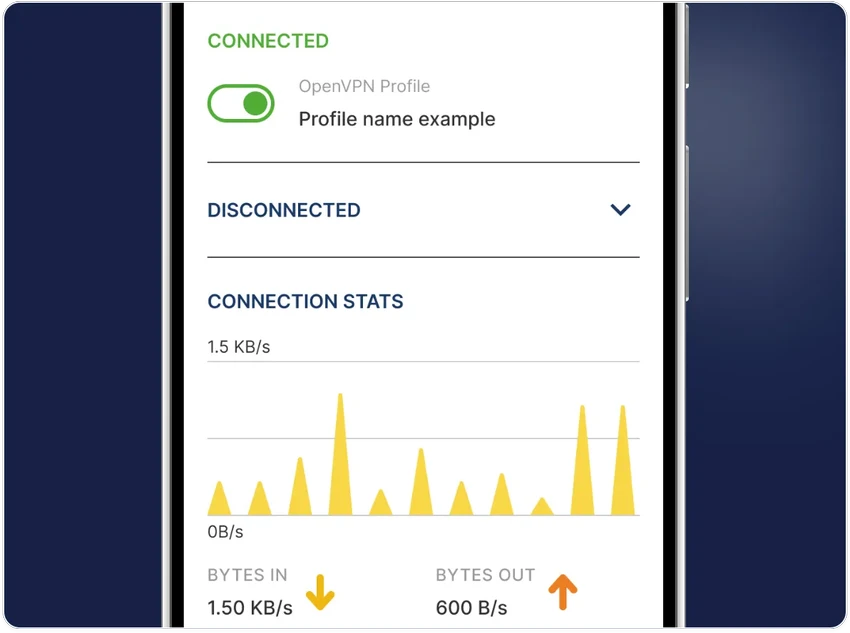

OpenVPN is a full-featured, open-source VPN solution that enables secure communication across public and private networks using the industry-standard SSL/TLS protocol. It is designed to support a wide variety of deployment scenarios, including remote access VPNs, site-to-site connections, Wi-Fi security, and enterprise-scale virtual private networks.
Rather than functioning as a browser-based proxy, OpenVPN creates secure network tunnels at the operating system level, allowing applications and devices to communicate over encrypted connections. With support for flexible authentication methods, strong encryption provided by the OpenSSL library, and extensive networking capabilities, OpenVPN is suitable for both individual users and organizations requiring secure remote connectivity.
Features of OpenVPN
- Create secure SSL/TLS-based VPN connections.
- Supports remote access VPN deployments.
- Supports site-to-site VPN configurations.
- Secures Wi-Fi network connections.
- Designed for enterprise-scale VPN environments.
- Supports load-balanced VPN server deployments.
- Tunnels IP subnetworks or virtual Ethernet adapters through a single UDP or TCP port.
- Uses OpenSSL encryption, authentication, and certificate features.
- Supports multiple encryption algorithms, key sizes, and HMAC digests available through OpenSSL.
- Supports:
- Certificate-based authentication
- Smart card authentication
- Two-factor authentication
- Allows user- and group-specific access control through firewall rules.
- Supports static pre-shared keys.
- Supports TLS-based dynamic key exchange.
- Supports adaptive link compression and traffic shaping.
- Works with networks using dynamic public IP addresses.
- Operates through NAT environments.
- Can establish secure Ethernet bridges using virtual TAP devices.
- Includes graphical user interface support on Windows and macOS.
Interface and Usability
OpenVPN is designed primarily as a networking tool rather than a consumer-focused VPN application, so the experience depends on how it is configured. Once installed, the graphical interface on Windows simplifies connecting to existing VPN profiles and managing connections. For users deploying their own VPN infrastructure, configuration requires networking knowledge, particularly when setting up certificates, routing, or server environments. However, the software's flexibility makes it suitable for a broad range of networking scenarios, from small remote-access deployments to larger enterprise implementations.
Who Should Use OpenVPN?
- Individuals who want secure remote access to private networks.
- Businesses deploying remote workforce VPN solutions.
- Organizations implementing site-to-site VPN connections.
- IT administrators managing enterprise VPN infrastructure.
- Users who require flexible authentication options, including certificates or two-factor authentication.
- Anyone seeking an open-source VPN platform for secure networking.
Conclusion & Recommendation
OpenVPN is a powerful and highly flexible VPN platform that supports everything from secure personal remote access to enterprise-grade networking deployments. Its use of SSL/TLS encryption, broad authentication options, and compatibility with diverse network environments make it a trusted choice for secure communications.


